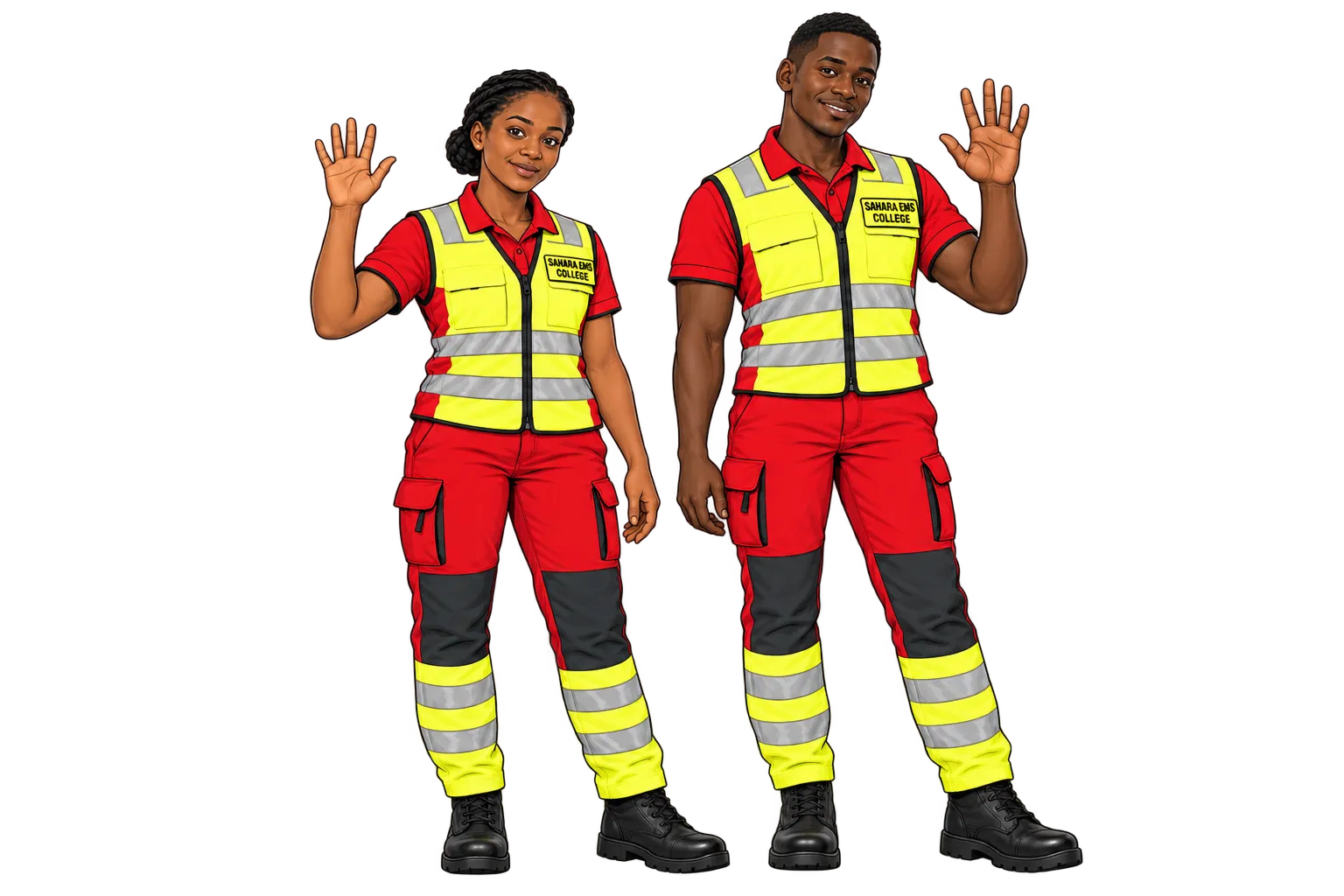
Many people in Kenya still see an ambulance as a vehicle that drives patients to hospital. Behind a modern ambulance stands a whole profession that treats, stabilises and triages patients where the emergency happens. Here you find out what that profession is, how our twelve-month AEMT programme prepares you for it, and why Kenya needs it now.
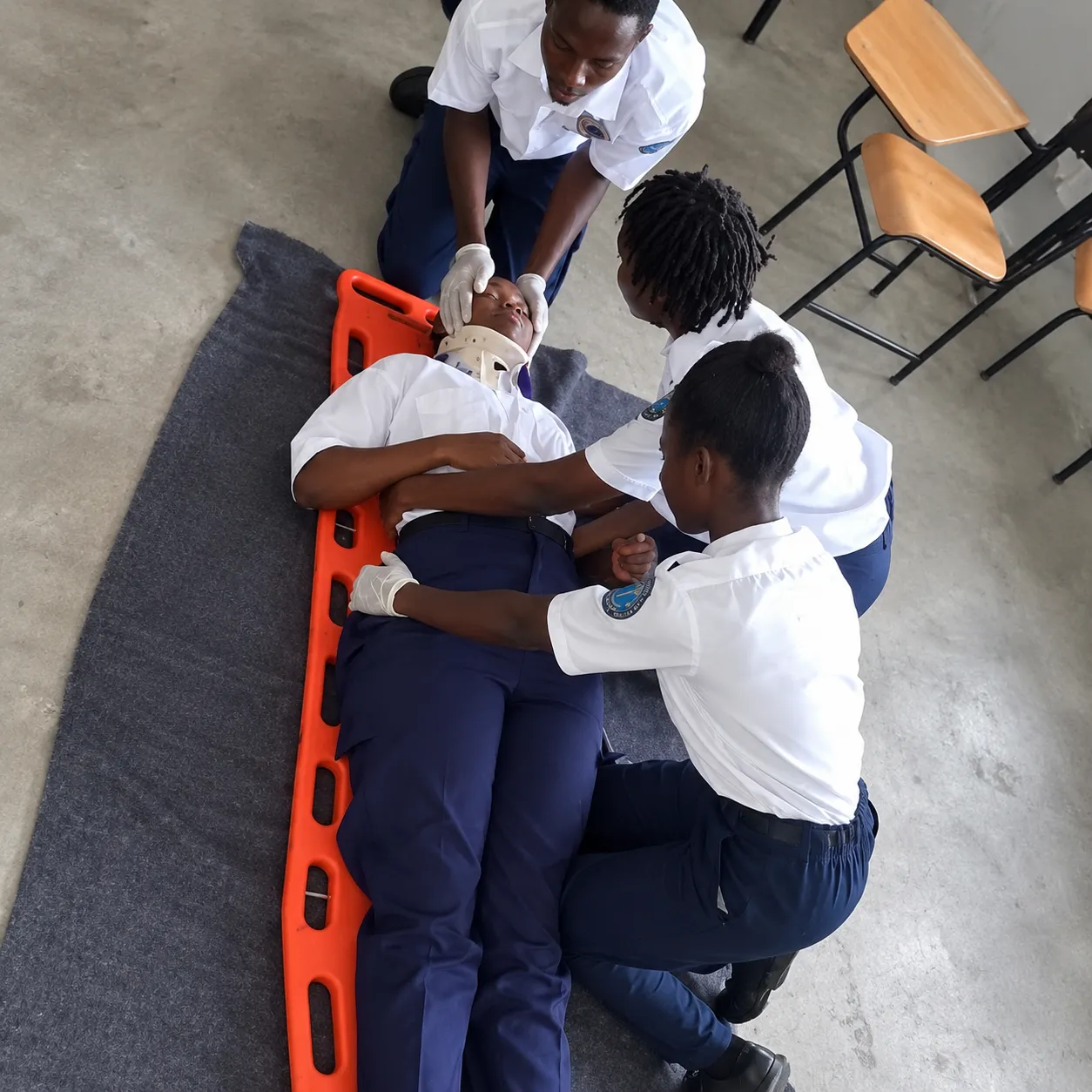
For many people in Kenya, an ambulance is a vehicle with a siren and a stretcher that takes a patient to hospital. In a modern emergency medical service (EMS), the ambulance brings emergency care to the patient: a trained crew starts treatment where the emergency happens — at the roadside, at home, at work — and keeps the patient stable all the way to the right hospital.
Behind this stands a whole profession, with its own training, protocols and responsibilities. In the first minutes after a crash, a cardiac arrest or a complicated birth, what this crew does often decides whether a patient survives — and how well they recover.
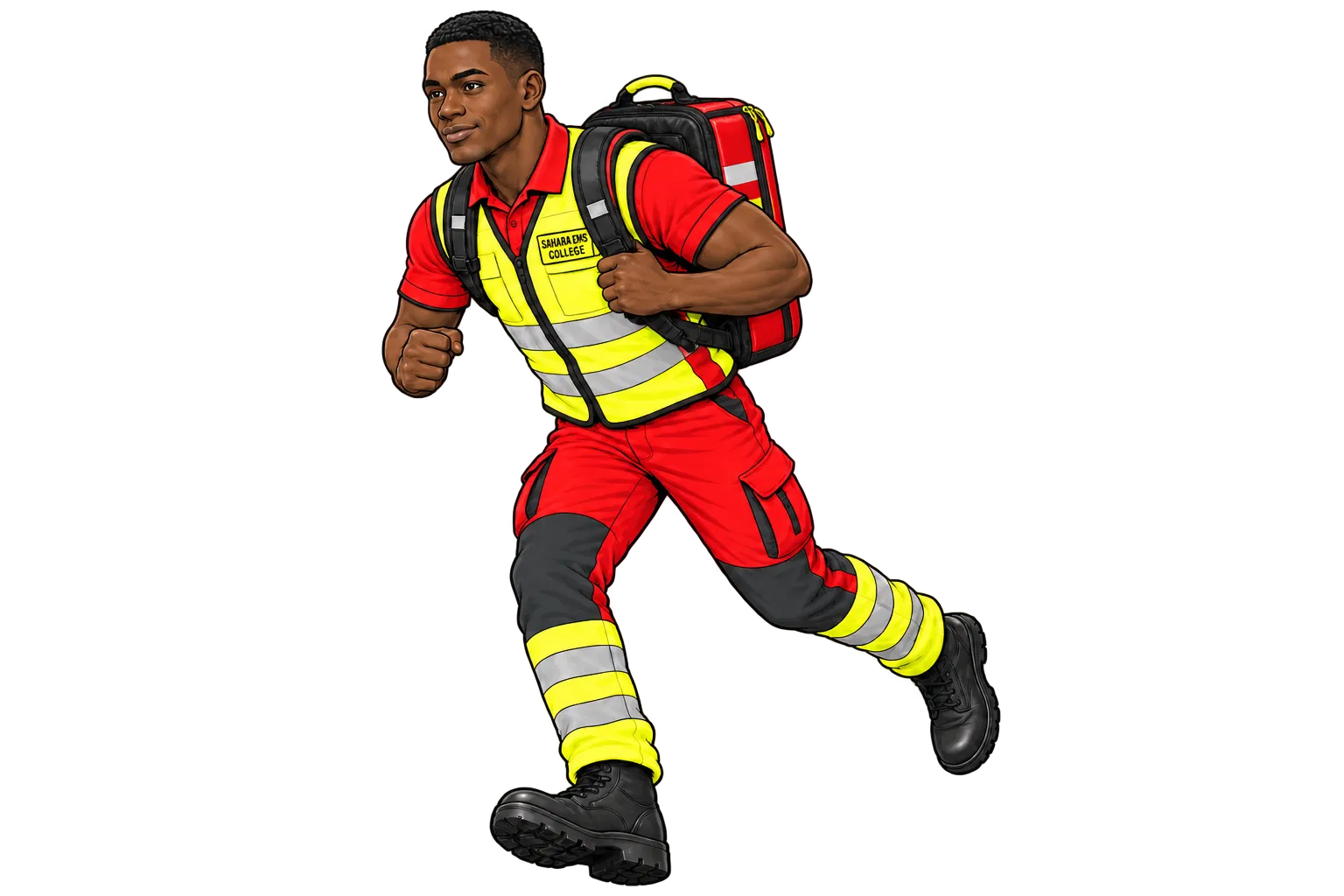
A dispatcher takes the emergency call, finds out what happened and sends the right crew. In Kenya, the national emergency number is 922.
The crew makes the scene safe, so that nobody else gets hurt, and gets a first picture of what happened.
A structured check finds what threatens life first: airway, breathing, bleeding, circulation, consciousness.
Stop the bleeding, open the airway, give oxygen, treat pain, deliver the baby, resuscitate — before the patient is moved.
With several patients, the crew decides who needs help first. It chooses the hospital that can treat this patient — not simply the nearest — and alerts it.
In the emergency department, the crew hands over with a clear report: what happened, what was found, what was done.
The difference: treatment starts within minutes, where the patient is — not after the drive to hospital. That is what AEMTs are trained for.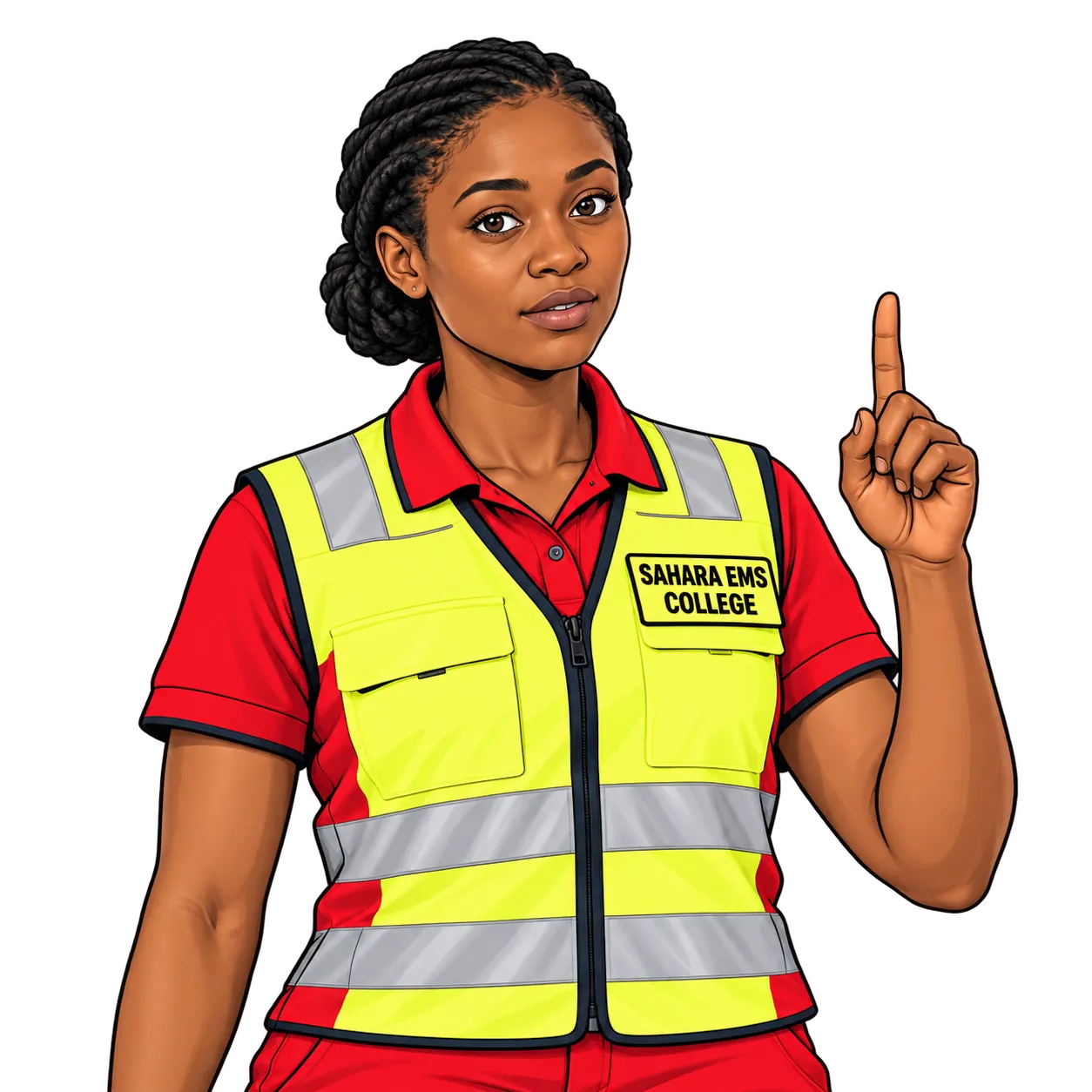
The AEMT is the health professional on that crew. When someone collapses, is injured in a crash or goes into labour before reaching hospital, AEMTs assess the patient, recognise what is life-threatening, treat it on the spot and keep the patient stable on the way to the right hospital — then hand over to the emergency department with a clear report.
It is a medical profession, not a driving job. AEMTs are trained to open and protect airways, support breathing, stop bleeding, place IV lines, give oxygen and selected emergency medicines, resuscitate, deliver babies and immobilise injured patients — always following protocols and working as a team.
See all 24 modules →Meet the instructors →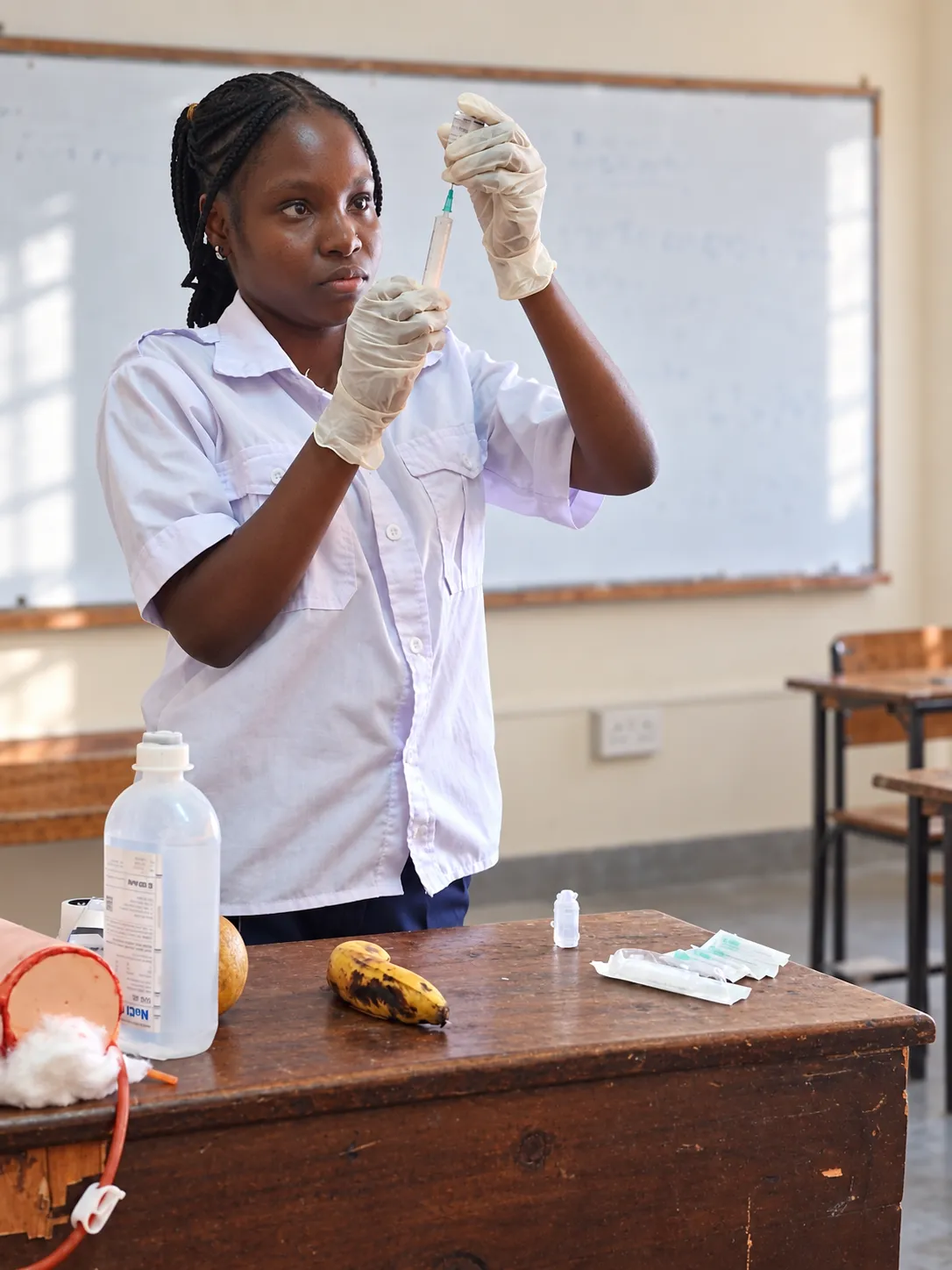
County ambulance services, private ambulance and rescue companies, hospital emergency departments, industry, mines, construction sites and large farms, events and sport — and, with experience, dispatch centres and training institutions.
A KCSE mean grade of C- or above, a calm head, compassion, physical fitness and the discipline to follow protocols. Students do not have to be top of the class — they have to be reliable, curious and willing to practise until a skill is safe.
AEMTs are health workers. The patient is their responsibility — from the first look at the scene to the handover in hospital.
Shifts, uniforms, protocols, a crew leader and clear rules on what each team member may do. New staff usually start alongside experienced colleagues.
Whatever comes next, an AEMT knows what to do when a family member, a neighbour or a colleague suddenly needs help.
Anatomy, patient assessment, airway and basic life support, including the AHA BLS provider course — full days in class, in the skills lab and on the manikins.
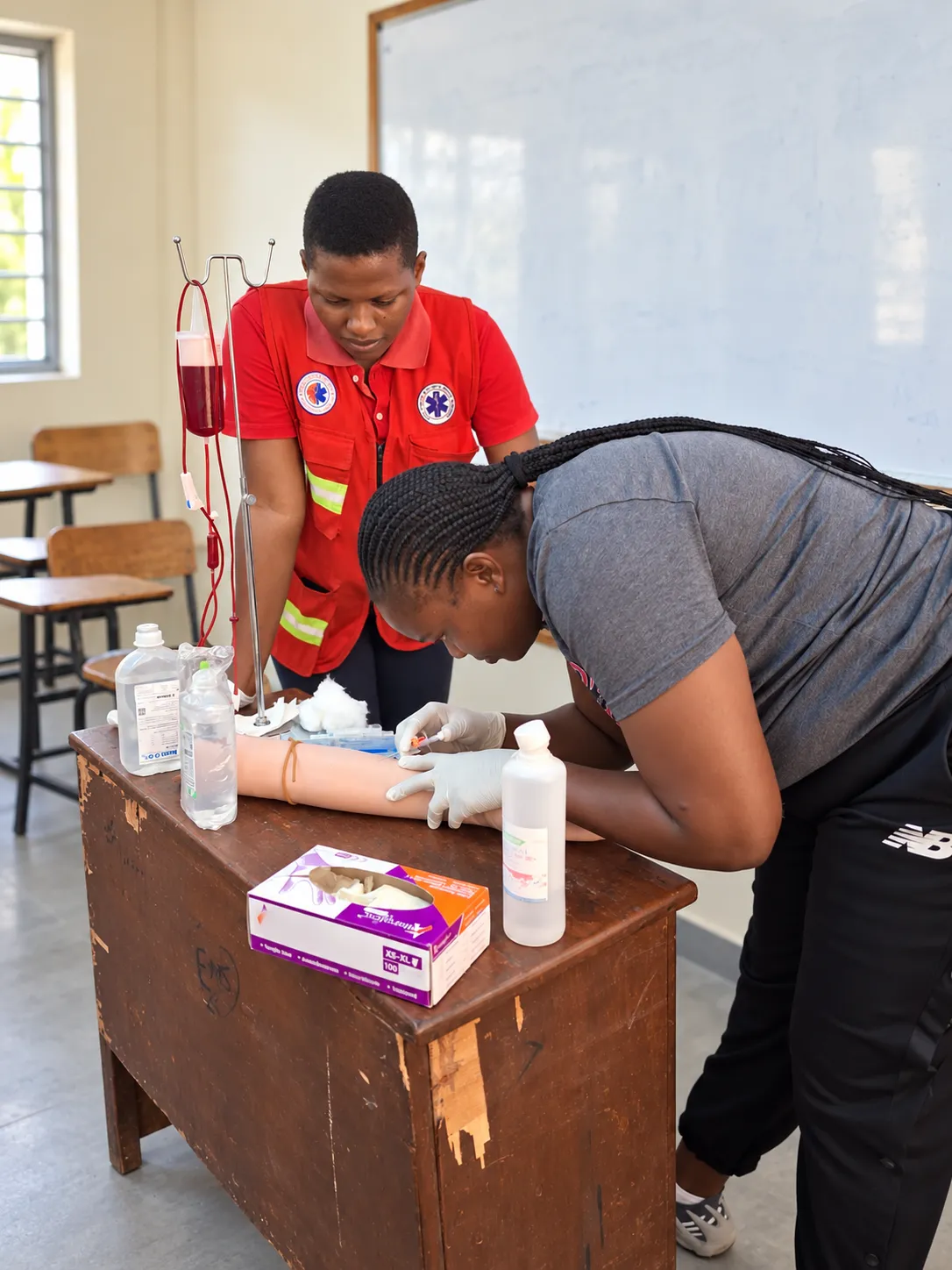
Cardiac, respiratory, obstetric and paediatric emergencies; bleeding, shock and spinal care; IV access and pharmacology.
Advanced airway management and cardiac life support, ambulance operations, rescue, incident command and dispatch — then the end-of-term written and practical exams.
Real patients under supervision: shifts on ambulances with a field preceptor and rotations in county hospitals in Nakuru and Kisumu, including emergency departments.
Portfolio sign-off and the KCEMT final examination, held in July and December. Then the first shift as the person who knows what to do.
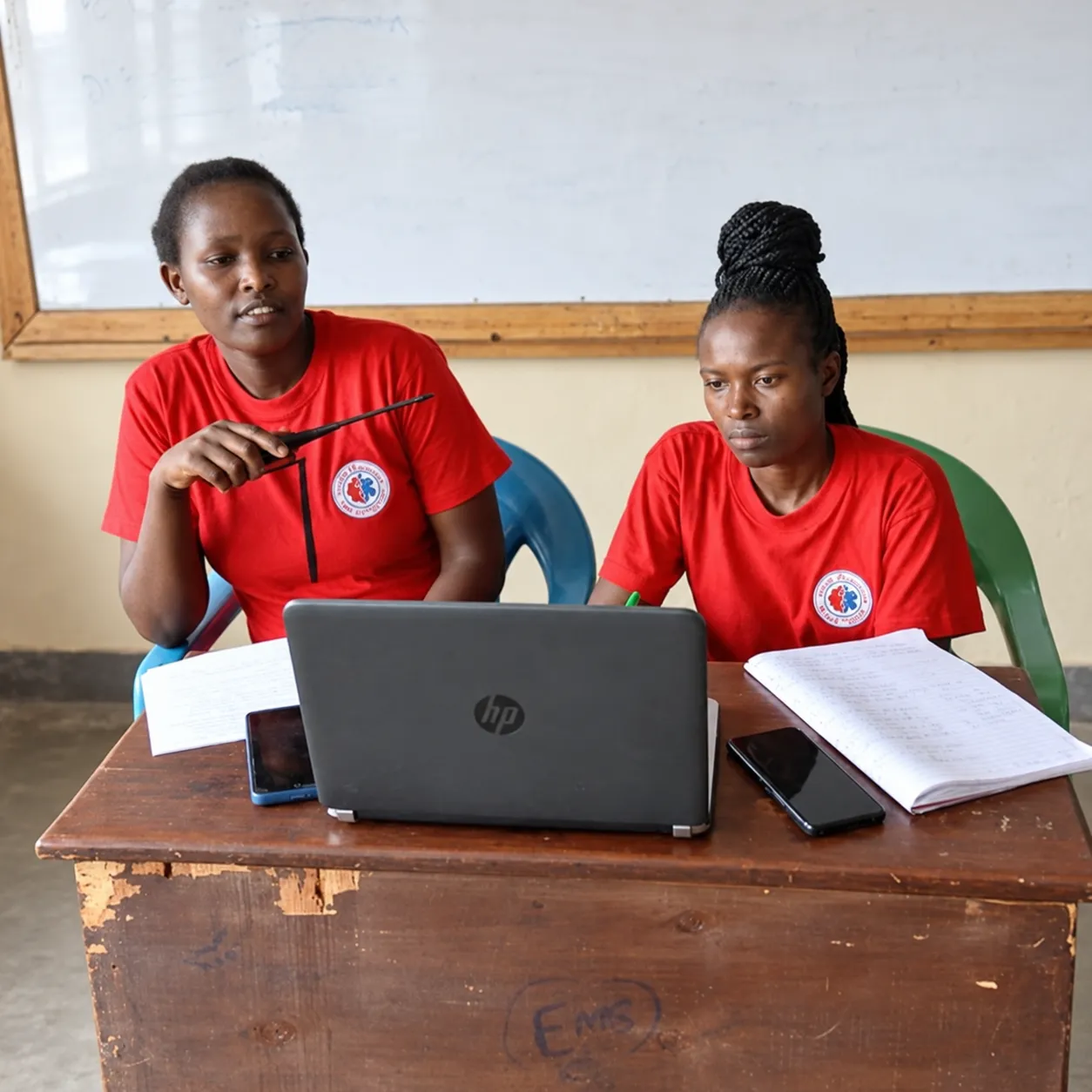
Since 2020 we have trained emergency care providers — today more than 500 course participants a year at our two campuses in Nakuru and Kisumu.
Through our partnerships with the County Governments of Nakuru and Kisumu, students rotate through county hospitals and ride on ambulances — always with a preceptor at their side.
Sahara EMS College is an official American Heart Association (AHA) Training Site. Every AEMT student completes AHA BLS during the programme and can add AHA ACLS at a student rate.
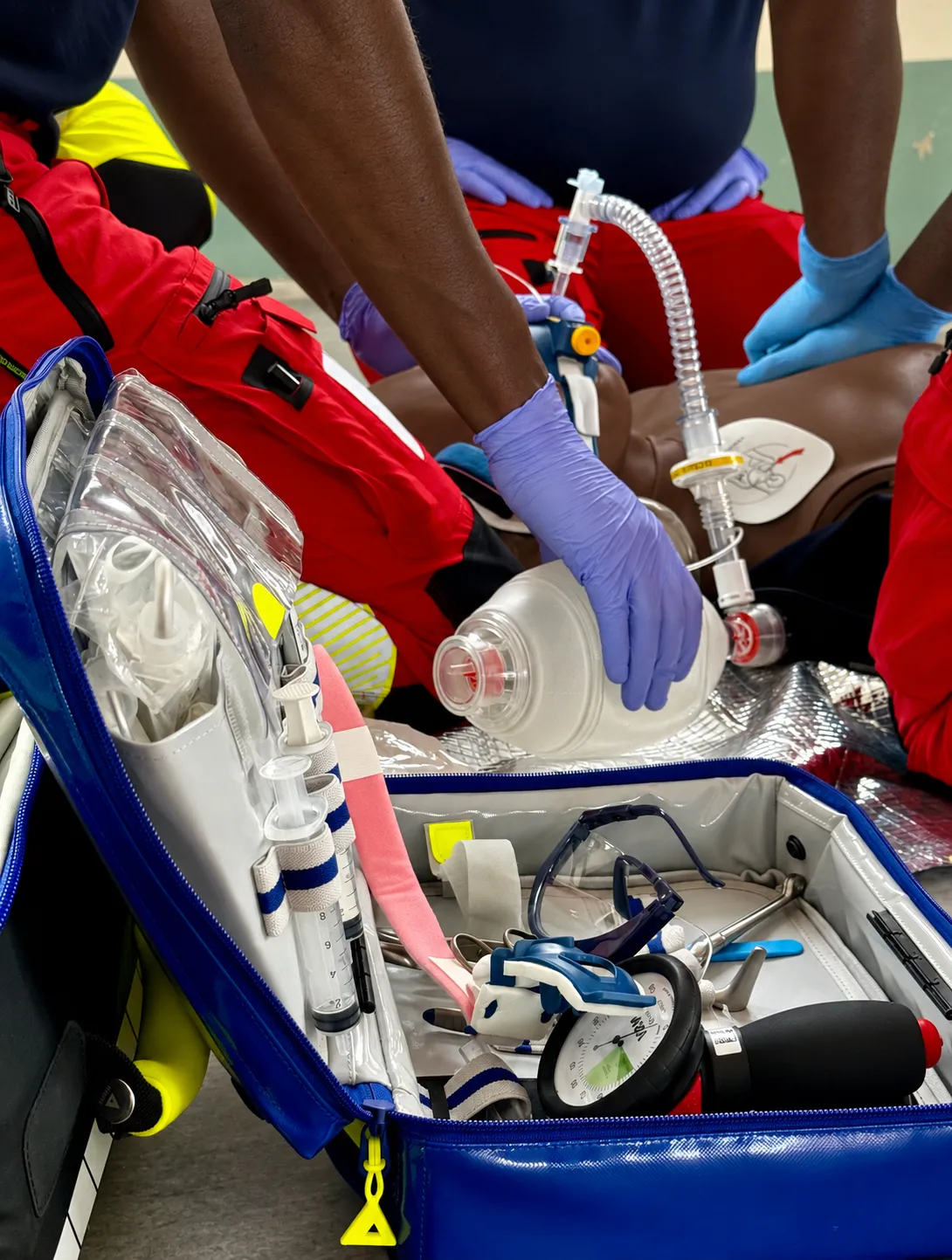
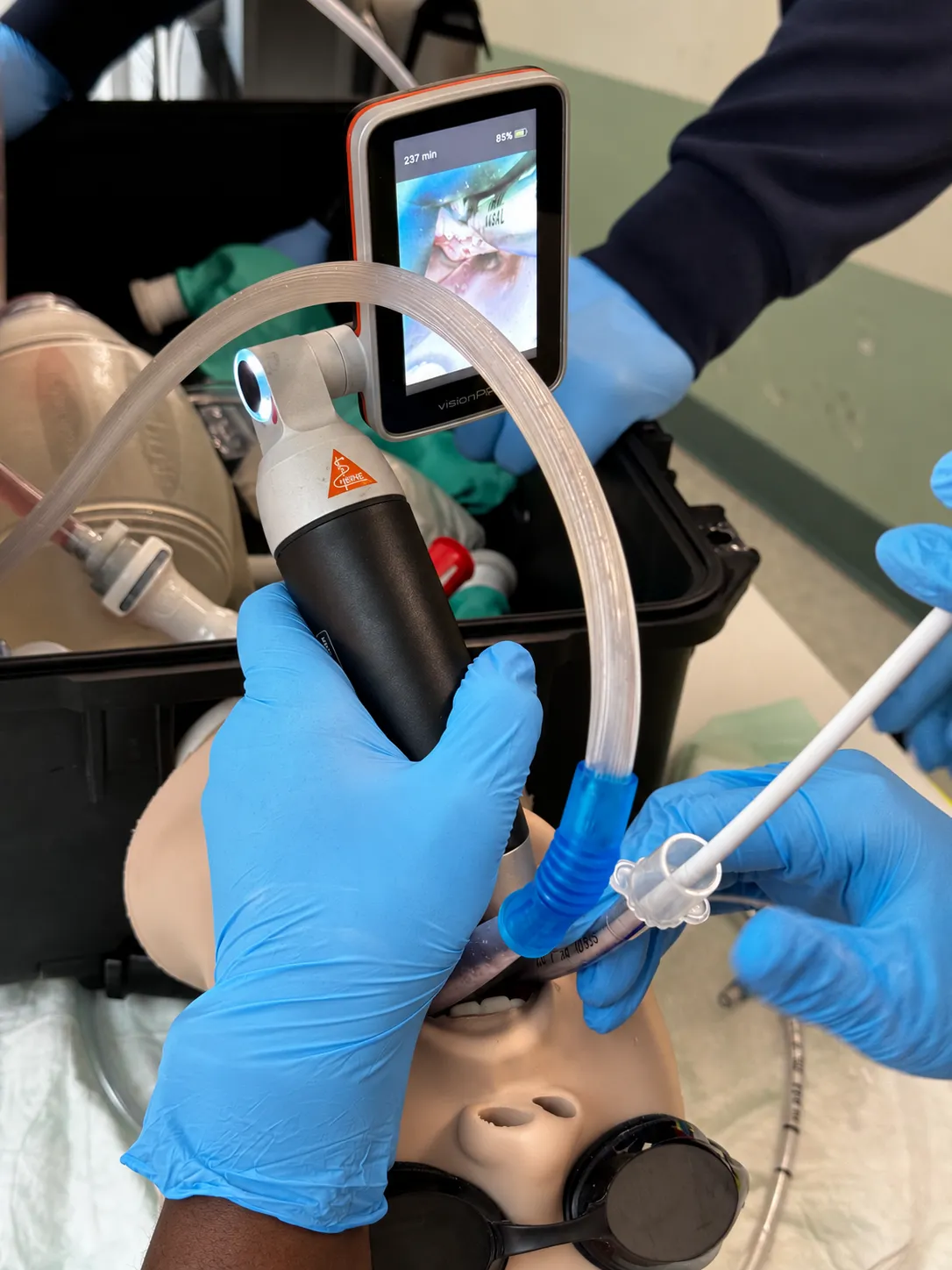
Every skill is practised hands-on: in the skills lab, in realistic scenarios with medical simulation and audio-video debriefing, and with video laryngoscopy for airway training.
Our faculty bring more than 20 years of pre-hospital practice and teaching into every class. Three of them are AHA- and NAEMT-certified instructors.
We take part in the national EMT curriculum process of the Ministry of Health, and RESQPool Academy, Germany, is our curriculum partner — so what we teach keeps pace with where Kenyan EMS is heading.
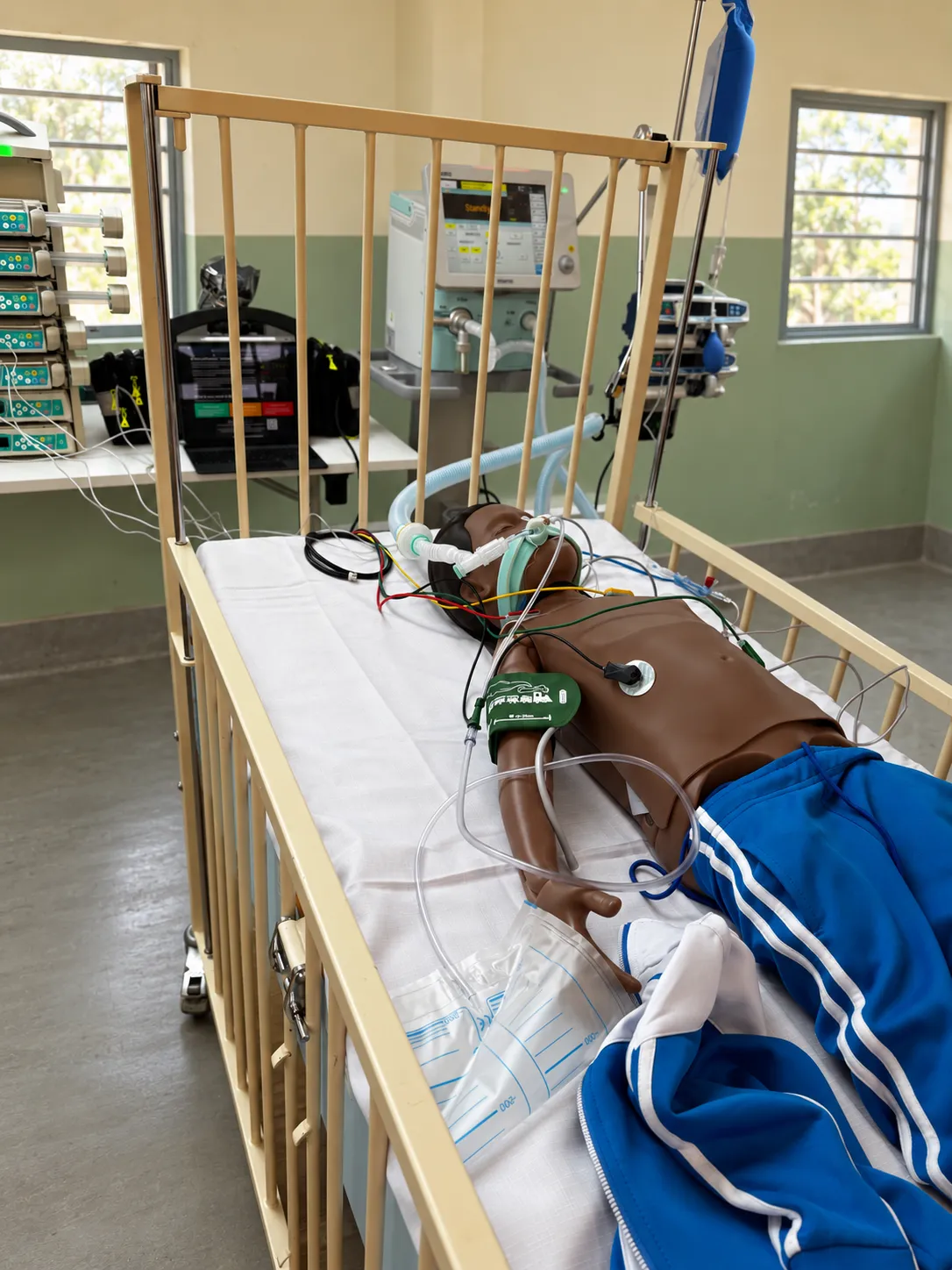
You only learn emergency care properly if you practise it on realistic patients and real equipment. Our skills labs work with modern simulation manikins, professional monitor-defibrillators and advanced airway equipment, and our teaching follows current international guidelines, including the 2025 AHA Guidelines. Because many ambulances in Kenya still carry far less, we also train every skill with minimal equipment — our graduates master both.
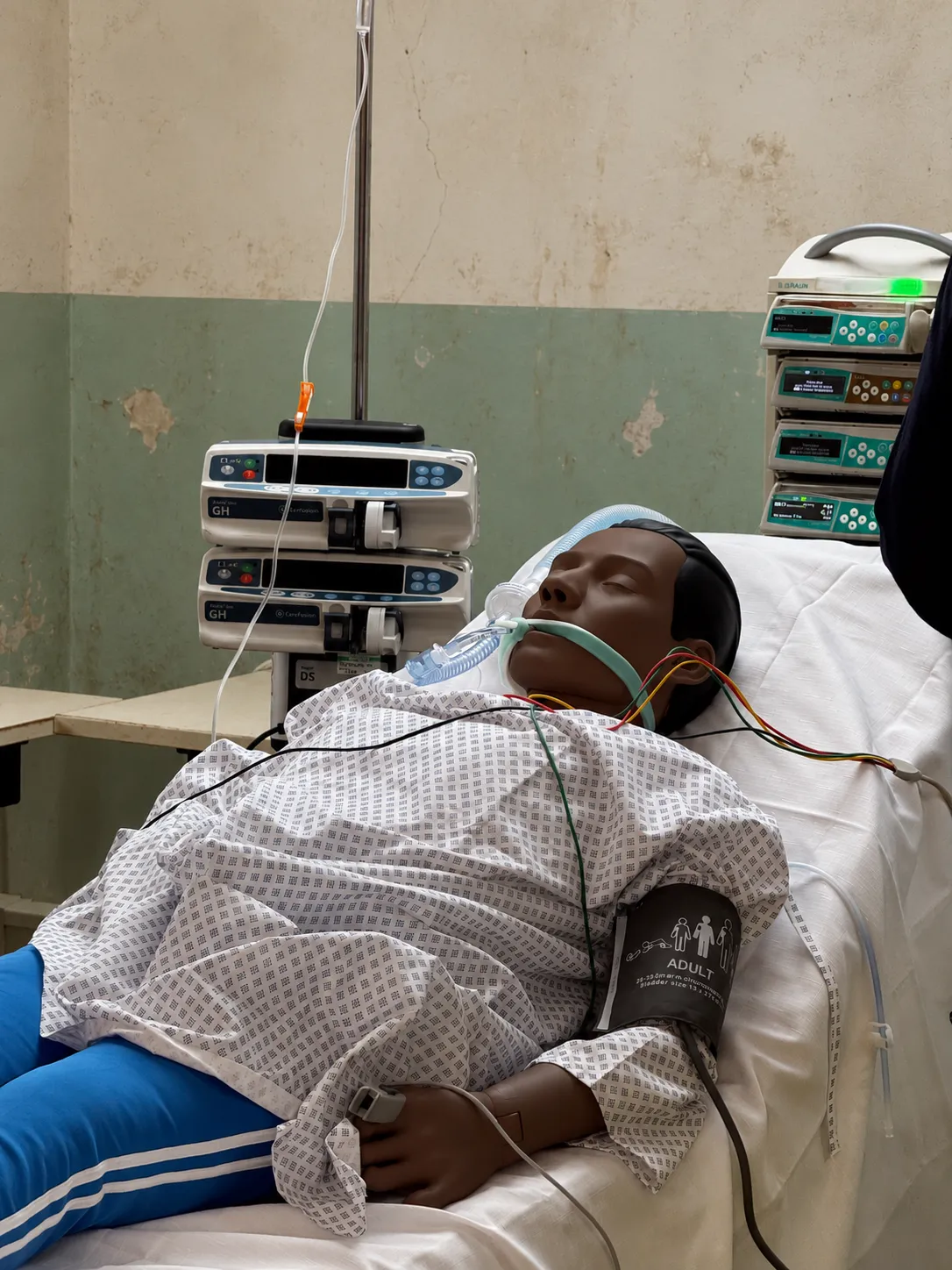
Simulation manikins connected to real monitors, oxygen and infusion pumps turn the skills lab into a realistic patient room.
Dedicated child and newborn manikins, because children are not small adults — and emergency births are everyday work for an EMS crew in Kenya.
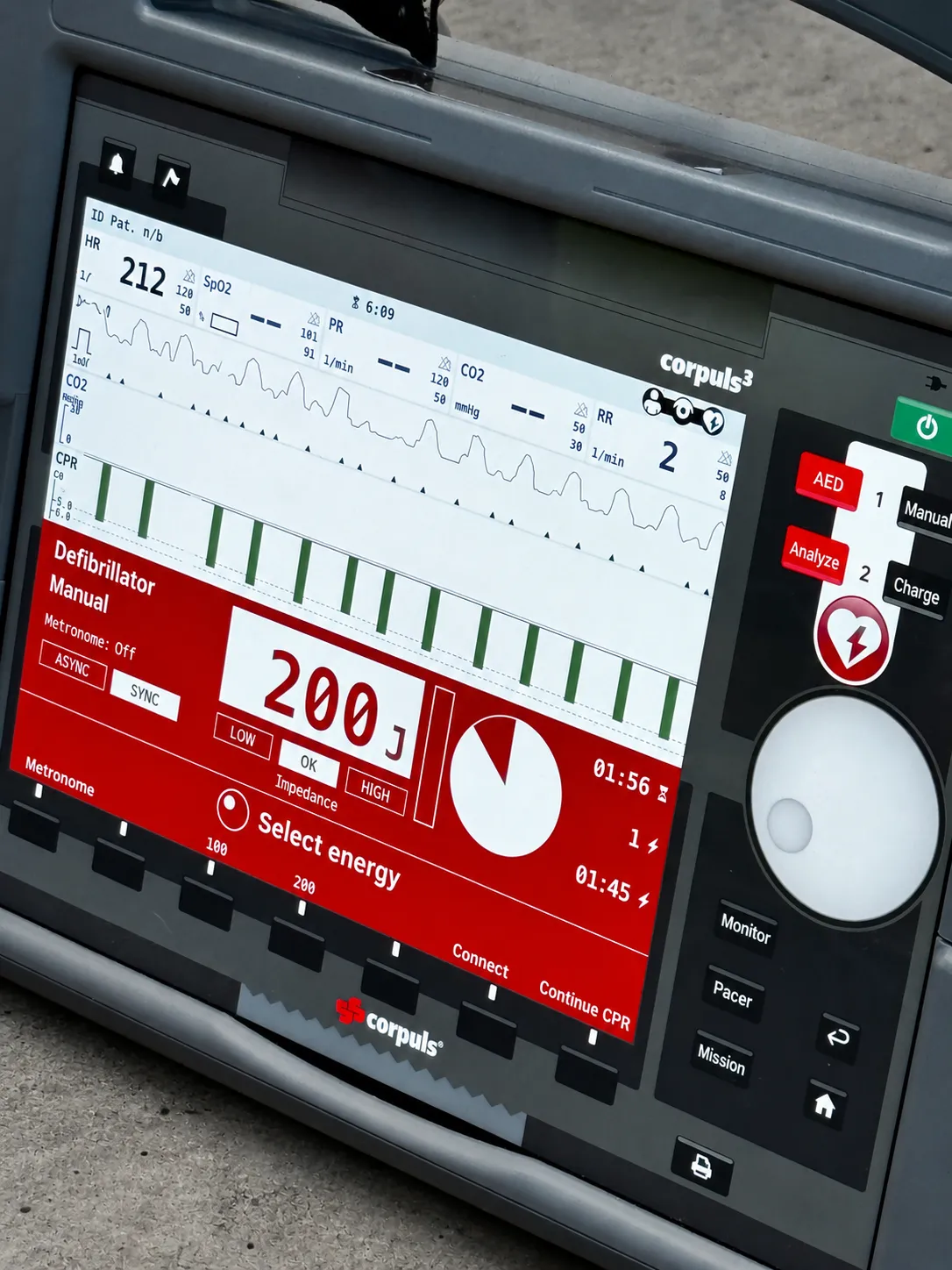
Professional emergency monitors (corpuls³) with ECG, oxygen saturation, blood pressure, capnography and live CPR feedback.
Video laryngoscopes, suction units and airway trainers — including drills with simulated vomit, because real airways are rarely clean.
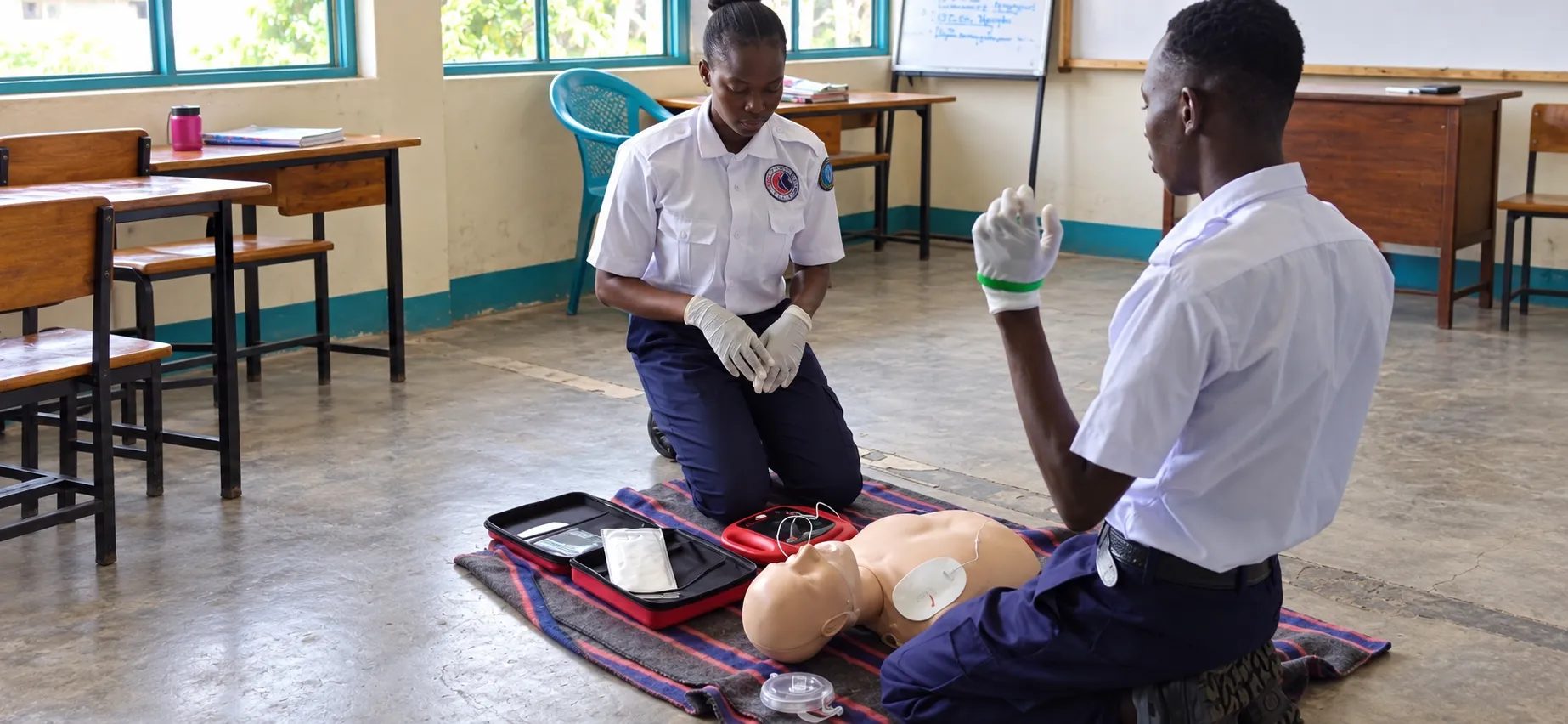
Feedback manikins measure compression depth, rate and recoil, so students see their real CPR quality instead of guessing it.
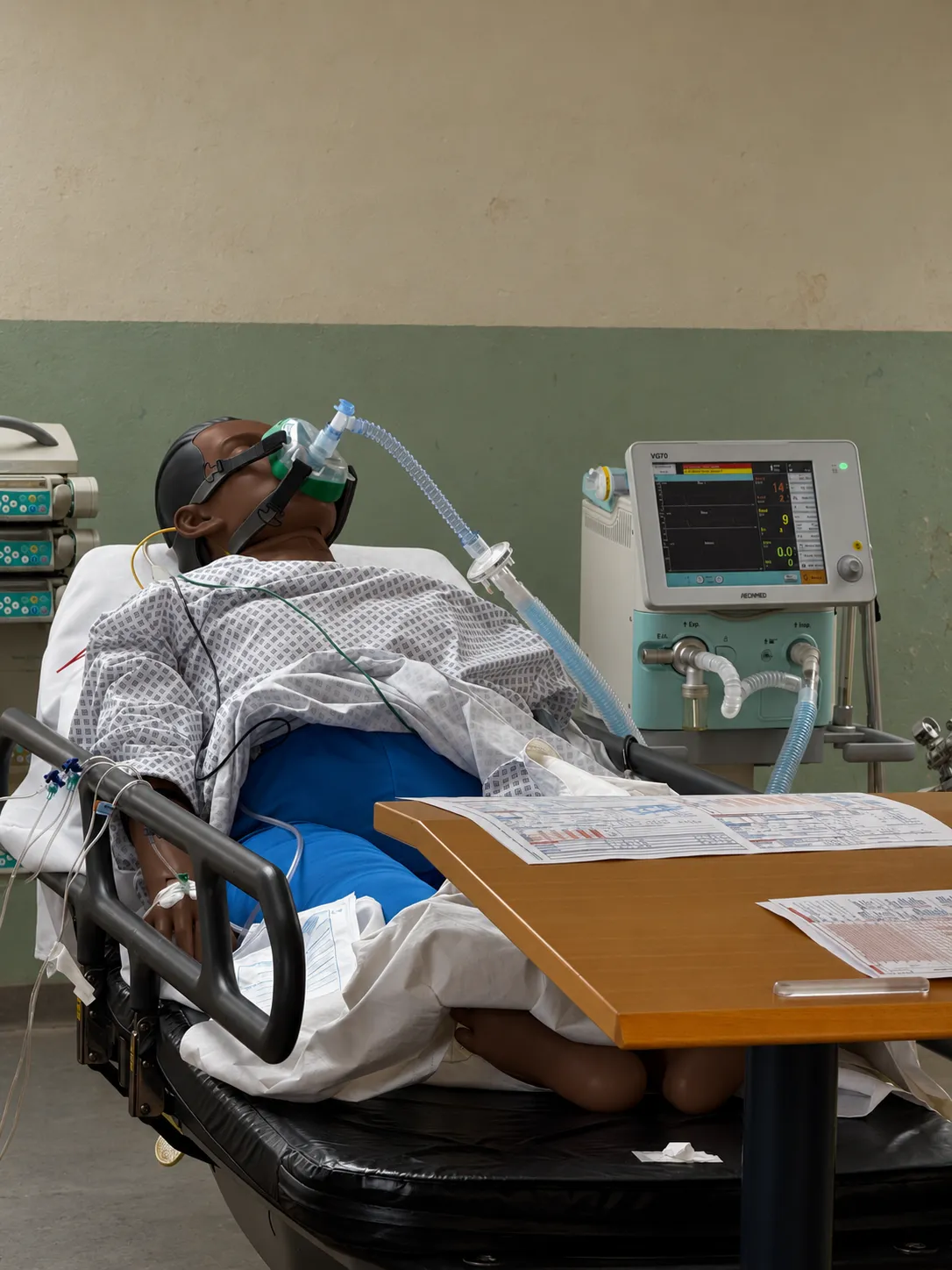
Realistic scenarios, recorded on audio and video and debriefed straight afterwards — so every team sees what it really did.
For a long time, many patients in Kenya reached hospital in a private car, a taxi or on a motorbike — and ambulances were often staffed by people without emergency training. That is changing fast. Kenya is building a national emergency system, and it needs qualified people to run it.
people died on Kenya's roads in 2025, according to NTSA — and 3,995 more between January and early October 2026. Many deaths happen before the patient reaches hospital.
The Constitution says no person may be denied emergency medical treatment. The Health Act 2017 names pre-hospital care as part of that right.
The Ministry of Health launches the Kenya Emergency Medical Care Policy 2020–2030: one emergency number, dispatch centres and minimum standards for ambulances.
The Kenya Medical Practitioners and Dentists Council (KMPDC) becomes the regulator of emergency medical services and requires ambulances and emergency care personnel, including EMTs and paramedics, to register.
The 922 emergency number and the National Ambulance Dispatch Centre go live for all 47 counties. Ambulance evacuation and the first 24 hours of emergency care are free for every Kenyan.
Work on a national curriculum for EMTs continues. Sahara EMS College takes part in the national workshop in Machakos and shares its background brief on how EMTs should be trained.
In December 2025 Kenya's Auditor-General reported that counties did not routinely employ EMTs or paramedics and pulled nurses from the wards to staff ambulances. A national system with free emergency care needs trained crews instead.
SHA pays ambulance providers only if they hold a KMPDC licence and are sent by the national dispatch centre. Services that want to be paid need registered, well-trained staff.
A young system needs crew leaders, supervisors, dispatchers and instructors. Those who qualify and gain experience now are first in line when these roles are created.
Sources: Constitution of Kenya 2010, Art. 43(2) · Health Act 2017, s. 7 · Ministry of Health, Kenya Emergency Medical Care Policy 2020–2030 (launched July 2021) · KMPDC newsletter, December 2025, and registration notices 2025–2026 · Office of the Auditor-General, performance audit on emergency medical care services, December 2025 · Social Health Authority, Emergency, Chronic and Critical Illness Fund and ambulance tariffs, 2026 · Launch of the 922 number and the National Ambulance Dispatch Centre, 5 August 2026 (The Star, Citizen Digital) · NTSA road fatality figures as reported by Citizen Digital (December 2025) and Eastleigh Voice (October 2026).
We publish our curriculum and our proposed scope of practice so that students, parents, employers and regulators can see exactly what we stand for. Both documents are our proposals in the national process — drafts for discussion, not yet national rules. For the details of the next intake, such as fees, hours and examinations, see Courses and Admissions.
No. Driving an ambulance safely is a skill of its own, taught in our EVOC course. The AEMT is the health professional who assesses and treats the patient. In a well-run service, the crew combines both: an ambulance operator who drives and an AEMT who cares for the patient.
Nurses and doctors work mainly in hospitals and clinics. AEMTs are trained for the time before hospital: in homes, on roads and in moving vehicles, often with limited equipment and no doctor at their side. They follow protocols set with doctors and work hand in hand with the hospital teams who take over their patients.
The programme prepares students for the final examination of the Kenya Council of Emergency Medical Technicians (KCEMT), held in July and December; graduates receive their certificate after passing it. Since late 2025 the Kenya Medical Practitioners and Dentists Council (KMPDC) has been the regulator of emergency medical services, and emergency care personnel register with KMPDC. Ask any school you compare which body examines its graduates.
Because the programme goes well beyond a basic emergency course: twelve full months, IV access and pharmacology, advanced airway management and cardiac life support, AHA BLS and 700 hours with real patients. Kenya is still defining national levels and titles for emergency care staff; the formal qualification is the certificate awarded after the KCEMT final examination.
KES 128,500 in total: tuition of KES 95,000 plus admission, uniform, the AHA BLS course, the clinical attachment and the KCEMT examination. You pay 50% on admission and the balance in monthly instalments; the admission letter confirms the schedule. Each intake includes sponsored places for bright students who need them.
Emergency work has risks, and good training is how they are managed. Scene safety, infection prevention, safe lifting and teamwork are taught from the first module. During the clinical attachment, students always work under the supervision of a preceptor.Our Student Code of Conduct sets out the safety rules every student follows, from Hepatitis B vaccination to the safe handling of sharps, and what the college promises in return.
No school can honestly promise a job. But the need is clear: Kenya's new national dispatch system links hundreds of public and private ambulances, and the Auditor-General found in 2025 that counties lacked employed EMTs. Placements on ambulances and in county hospitals are also where students meet future employers.
Yes. Graduates add AHA ACLS at a student rate, AHA PALS and PHTLS, and can grow into dispatch, teaching or crew leadership. Diploma and degree programmes in emergency care and paramedical science are offered in Kenya — for example at KMTC and Masinde Muliro University (MMUST) — subject to their own entry requirements.
Applicants with D+ or D can join after our Emergency Medical Responder (EMR) course, which works as a bridge (three to four weeks, KES 25,000), or with a certificate from a recognised medical-related course.
Please do. Students are welcome on their own or with their parents. Come to our Nakuru campus (Pioneer Plaza, Mburu Gichua Road) or our Kisumu campus (SIFA House, Mission Road), see the skills lab and ask our instructors anything. Call or WhatsApp 0700 669 565 to arrange a time.
Students and parents are welcome: see the skills lab, meet the instructors and ask every question you have. The next AEMT intake starts in January 2027 — applications close on 5 December. Call or WhatsApp 0700 669 565.