
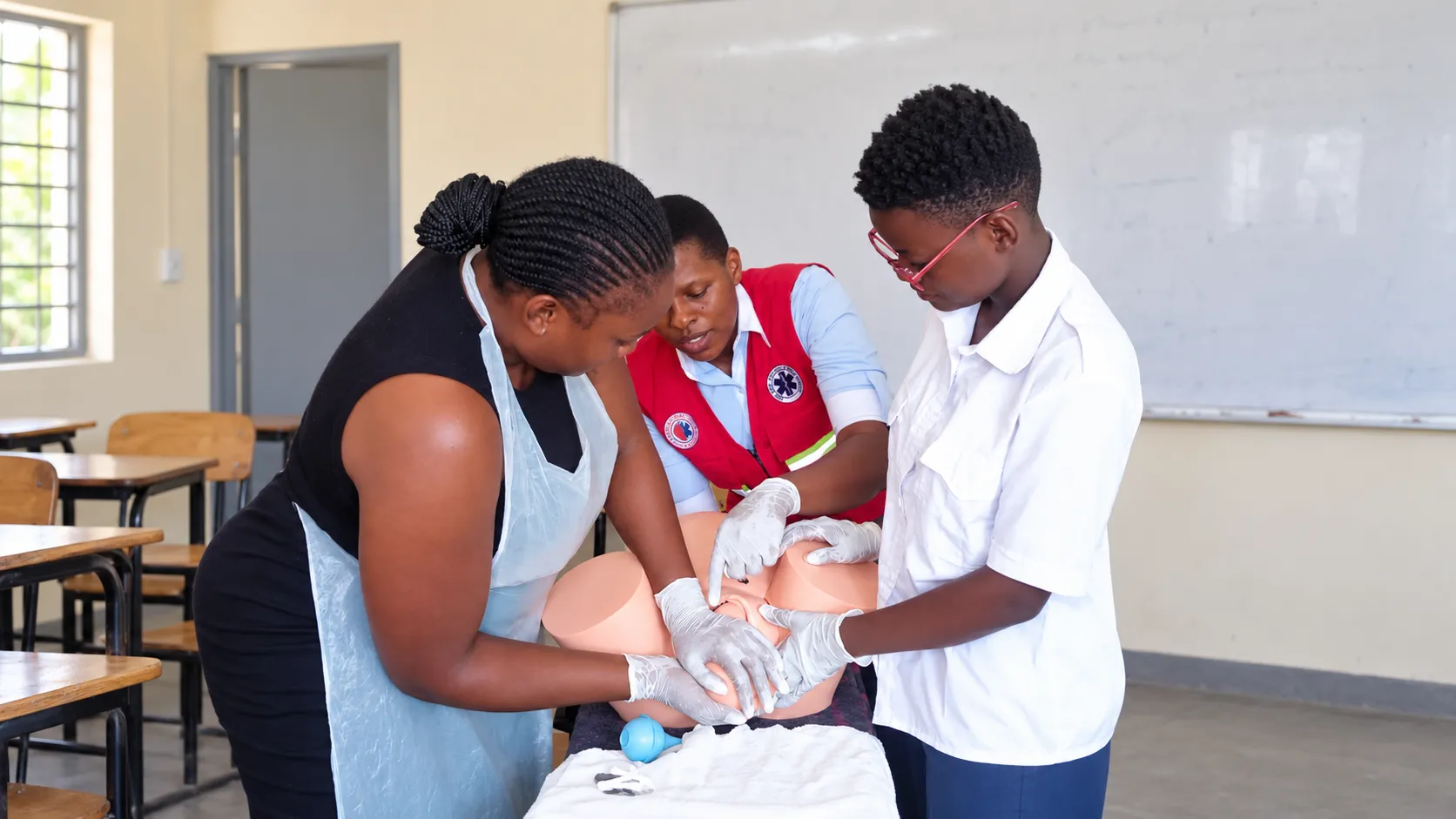
A great deal is said about quality in emergency care: guidelines, algorithms, protocols, courses, simulation. All of it matters. Yet one question often goes unanswered: how do we actually work on a real call? Between the textbook and the roadside there are only a few minutes — and many decisions, made under time pressure, with incomplete information, in a team.
Good emergency care is not only about knowledge
Patient-safety research has shown for years that errors rarely come from missing knowledge. More often they come from communication within the team, situational awareness, prioritisation under pressure, cognitive overload — or the opposite, under-stimulation. Aviation calls these human factors and built Crew Resource Management (CRM) around them. Emergency medicine is learning the same lesson.
Four gaps in Kenyan EMS today
1. A young system without feedback loops
Kenya’s Emergency Medical Care Policy 2020–2030 explicitly calls for clinical audit, quality-of-care surveys and assessments of emergency care providers. In practice, most crews finish a call, write the patient report — if there is one — and move on. Structured case reviews and incident reporting systems are still rare.
2. Training focuses on the critical; reality often is not
EMT training rightly concentrates on cardiac arrest, airway management and major trauma. But a large share of calls are inter-facility transfers, obstetric emergencies, unclear weakness, diabetic or hypertensive problems. These need careful assessment and clinical reasoning rather than a dramatic intervention.
3. The risk of the “simple” call
When a call looks harmless, attention drops and routines get shortened: a quick look instead of a full assessment, one set of vital signs instead of repeated ones. Human-factors research describes this under-stimulation as a risk in its own right.
4. Experience stays with individuals
Without structured reflection, what an experienced EMT knows stays in that person’s head instead of becoming knowledge the whole service can use. With a young workforce and high turnover, that knowledge leaves with every resignation.
Many problems arise not under maximum stress, but where the pressure seems low.
What supervision is — and what it is not
Supervision is neither inspection nor another classroom course. An experienced clinician accompanies a crew through a normal shift, observes how they work and reflects with them afterwards. Three elements make it work:
- Pre-brief: a short conversation before the shift — what will be observed, what will not, and what role the supervisor has.
- Observation: the supervisor rides along without taking over, and only steps in if a patient would otherwise be at risk.
- Structured debrief: not to judge decisions, but to understand how they came about — the same method that makes simulation debriefing so effective.
Crucially, supervisors are not line managers, and what they observe has no disciplinary consequences. Only then will crews speak openly about the decisions they actually made.
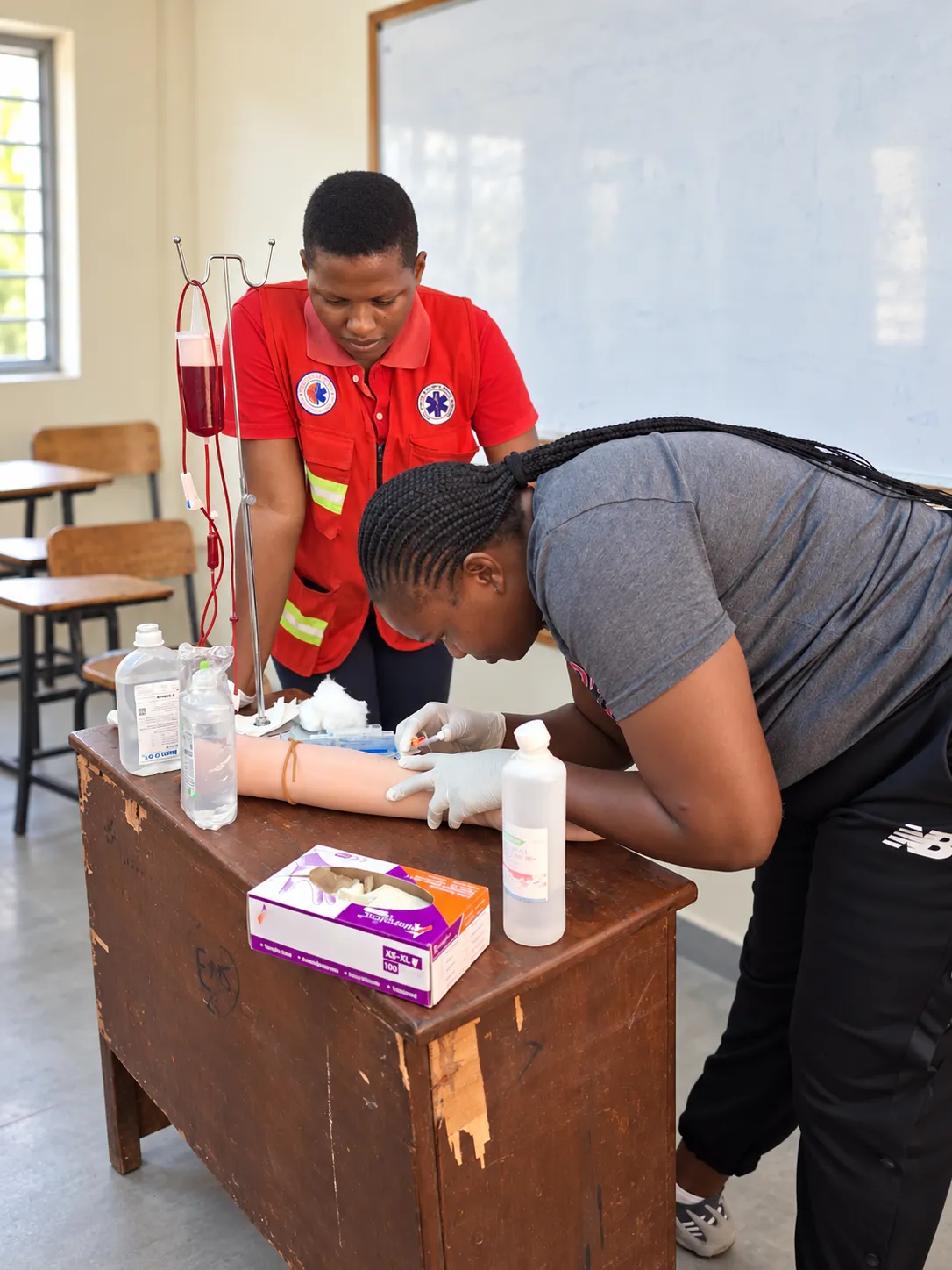
What a supervision system for Kenya could look like
Supervision does not need new equipment or a large budget. It needs time from experienced clinicians, clear rules and a way to turn individual observations into learning for the whole service. A workable model for county and private ambulance services could look like this:
- Who supervises: experienced EMTs, paramedics, nurses or clinical officers with pre-hospital experience, trained in observation and debriefing — and never the crew’s own line manager.
- How often: every crew member at least once or twice a year, more often during the first year after qualifying, when habits are formed.
- What is observed: scene safety, patient assessment, clinical decisions, communication with patients, relatives and the receiving facility, infection prevention, equipment readiness and documentation.
- How it starts: one station as a pilot, a simple one-page observation guide, and a quiet place for the debrief after the shift.
- Where seniors are few: peer supervision — crews from different stations observe each other — and debriefs by phone or video when distances are long.
- How the service learns: recurring patterns, never names, feed into training, protocols and equipment decisions. This is exactly the kind of clinical audit and quality-of-care monitoring the national Emergency Medical Care Policy asks for.
Ground rules matter as much as the model: participation is non-punitive, what is discussed stays confidential, and patient confidentiality applies to the supervisor just as it does to the crew. The only exception is a situation in which a patient is at risk.
Why now
Since 2025 the Kenya Medical Practitioners and Dentists Council requires ambulances, paramedics and EMTs to register — a clear signal that pre-hospital care is becoming a regulated profession with professional standards. Commentators have pointed out for years that national standards for pre-hospital provider knowledge and skills were missing. Registration alone will not close that gap. A culture in which crews regularly look at their own practice, together with someone who has done the job before, will. Kenya’s EMS is young enough to build that culture in from the start, instead of retrofitting it decades later.
Our position
At Sahara EMS College, EMT students complete a six-month clinical attachment — 700 hours in hospitals and on ambulances under a field preceptor — before they sit the KCEMT final examination, and every simulation scenario ends in a structured debrief. Observation and constructive feedback are part of how our graduates learn their profession. We believe this kind of guided reflection should not end on graduation day — and that supervision deserves a firm place in how Kenyan ambulance services develop their crews.
Sources: Ministry of Health, Kenya Emergency Medical Care Policy 2020–2030 and Strategy 2020–2025 · KMPDC public notice on the registration of ambulances and emergency care personnel (2025) · The status and future of emergency care in the Republic of Kenya, African Journal of Emergency Medicine (2021) · Helmreich, Merritt & Wilhelm, The evolution of Crew Resource Management training, Int J Aviat Psychol 1999 · Eppich & Cheng, PEARLS debriefing framework, Simul Healthc 2015